Adapt an open model with LoRA or full fine-tuning (FFT). Bring your dataset and take your custom model from training to inference on Arnict. Coming soon.
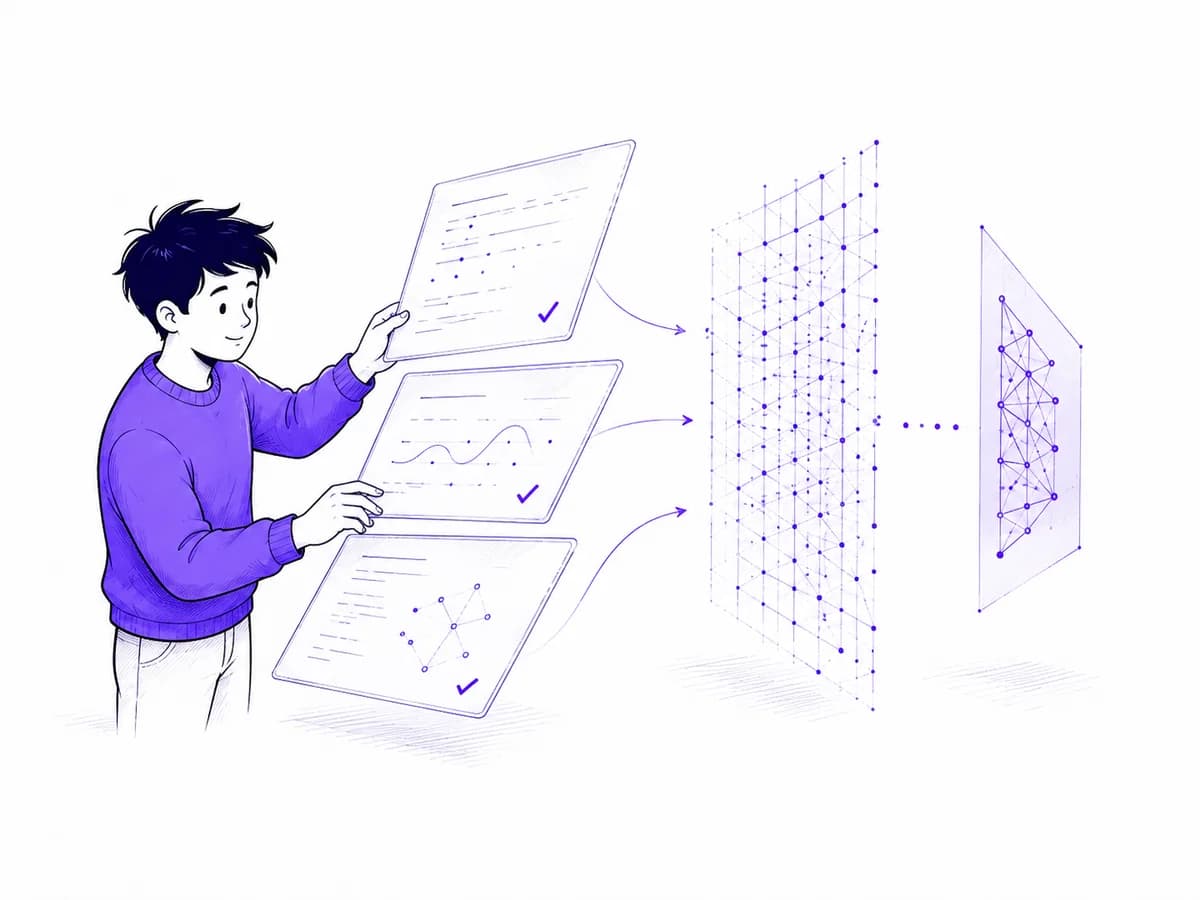
Your examples, a model that fits.
Coming soon
Fine-tuning without the infrastructure work.
Bring your dataset and choose a base model. Adapt it with LoRA or full fine-tuning, then use custom-model inference to put the result to work.
See fine-tuning pricing →- Methods
- LoRA + full fine-tuning
- Your input
- A base model + dataset
- Next step
- Custom-model inference
Get training updates by email. No account required.
The planned training stack includes Unsloth, Axolotl and Hugging Face TRL. Supported configurations will be documented when training opens.
Unsloth
Planned for efficient model fine-tuning workflows.
Axolotl
Planned for configuring and running fine-tuning jobs.
Hugging Face TRL
Planned for supervised fine-tuning workflows.
Both LoRA and full fine-tuning are planned. Your task, dataset and evaluation results should guide the choice.
Scroll to compare all columns →
| Approach | What changes | Consideration | Best starting point |
|---|---|---|---|
| Prompting | Instructions and examples in the request | Each request must include the context the model needs. | Test a base model before deciding to train. |
| LoRA | Trainable adapters added to a base model | The base weights stay fixed. Results depend on the task and training data. | Evaluate adapters when you need task-specific behavior. |
| Full fine-tuning (FFT) | The model’s weights are updated | Typically requires more training compute and memory than adapter training. | Evaluate when broader changes to model behavior are needed. |
For the method behind LoRA, read the original research paper.
Join the training update list. In the meantime, try a base model and prepare the examples you want it to learn from.